GET A FREE CLASS!
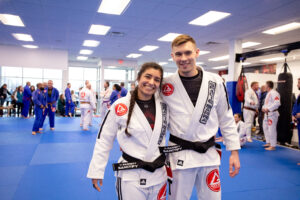 The Gracie Barra School of O’Fallon was founded in October 2011. Our school is the result of the efforts of Professor Mike Buckels, a 4th Degree Black Belt under Marcio Feitosa and Master Carlos Gracie Jr.
We offer world-class level Brazilian Jiu-Jitsu instruction for individuals, families, and Law Enforcement officials of St. Charles County and is a reference for fitness, character development, self-defense, martial arts, and Brazilian Jiu-Jitsu training for the communities of O’Fallon, Lake Saint Louis, Dardenne Prairie, St. Peters and Wentzville.
The Gracie Barra O’Fallon classes are aligned with the Gracie Barra Program Structure developed by Master Carlos Gracie Jr. to meet specific learning needs from people with different ages, gender, and levels. Our clean, friendly, and progress-oriented environment allows you to have an inspirational, challenging, and technical training experience that will always make you feel like coming back.
Gracie Barra is for anyone who values honor, respect, martial arts, wellness, discipline, and is looking for a balanced lifestyle. It doesn’t matter if you are a person with no martial arts background that wants to lose weight or you just want to learn self-defense, a businessman looking for a stress-relieving activity, a parent searching for something to complement the education of your kids, or an experienced martial artist aiming for further development of your skill, come try the school.
We are sure you will find at our school an exciting and challenging place that will allow you to grow as a person and achieve your goals.
Get A Free Class Contact UsSome historians of Jiu-Jitsu say that the origins of “the gentle art” can be traced back to India, and was practiced by Buddhist Monks. Concerned with self-defense, these monks created techniques based upon principles of balance and leverage and a system of manipulating the body in a manner where one could avoid relying upon strength or weapons. With the expansion of Buddhism, Jiu-Jitsu spread from Southwest Asia to China, finally arriving in Japan where it developed and gained further popularity.
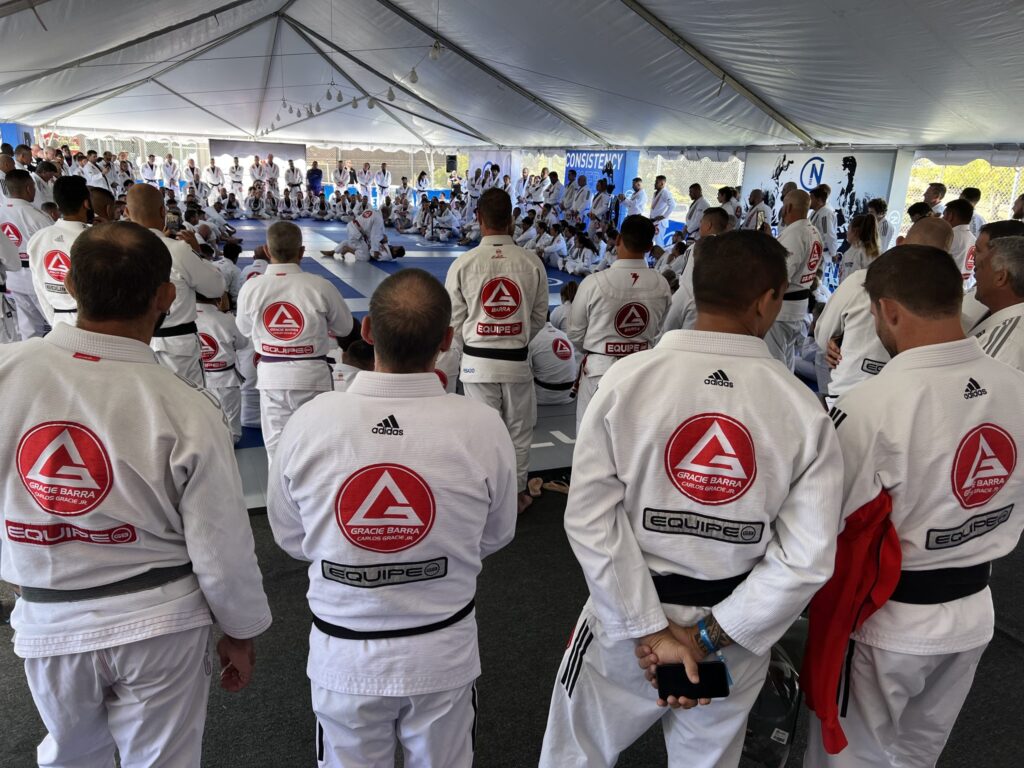
In the last days of the 19th century, some Jiu-Jitsu masters emigrated from Japan to other continents, teaching the martial arts, as well as competing in fights and competitions. Mitsuyo Maeda Koma, also known as “Conde Koma,” was one such master. Maeda was one of the top students of Jigoro Kano, the founder of what is now known as judo, and traveled the world demonstrating jiu-jitsu and fighting all comers. Koma arrived in Brazil in 1915, settling in Belem do Para the next year, where he met a man named Gastao Gracie, who at the time owned a circus in Belem where Maeda’s troupe performed. The father of eight children, among them five boys and three girls, Gastao became a Jiu-Jitsu enthusiast and brought his oldest son, Carlos, to learn to fight from the Japanese master.
For a naturally frail fifteen-year-old Carlos Gracie, Jiu-Jitsu became a method not simply for fighting, but for personal improvement. At nineteen, he moved to Rio de Janeiro with his family and began teaching and competing in the martial arts. In his travels, Carlos would teach classes, and also proved the efficiency of the art by beating adversaries in competitions who were more physically strong. In 1925, he returned to Rio and opened the first school, known as the “Academia Gracie de Jiu Jitsu.” Since then, Carlos started to share his knowledge with his brothers, adapting and refining the techniques to the naturally weaker characteristics of his family. Also, Carlos taught them his philosophies of life as well as his concepts of natural nutrition. Eventually, Carlos became a pioneer in creating a special diet for athletes, “the Gracie diet,” which transformed Jiu-Jitsu into a term synonymous with health. Having created an efficient self-defense system, Carlos Gracie saw in the art a way to become a man who was more tolerant, respectful, and self-confident. With a goal of proving Jiu-Jitsu’s superiority as well as building a family tradition, Carlos challenged the greatest fighters of his time, as well as managing the fighting careers of his brothers. Fighting opponents fifty or sixty pounds heavier, the Gracies quickly gained recognition and prestige.
Attracted to the new market, which was opened around Jiu-Jitsu, many Japanese practitioners came to Rio, but none were able to establish schools as successful as the Gracies. This was due to the fact that the Japanese stylists were more focused on takedowns and throws, and the Jiu-Jitsu the Gracies practiced had more sophisticated ground fighting and submission techniques. Carlos and his brothers changed the techniques in such a way that it completely altered the complexion of the international Jiu-Jitsu principles. These techniques were so distinctive to Carlos and his brothers that the sport became attached to a national identity, and is now commonly known as “Brazilian Jiu Jitsu,” practiced by martial artists all over the world — including Japan.
With the creation of an official body overseeing the administration of the sport, the rules and the ranking system started the era of sport Jiu-Jitsu competitions. Today, Jiu-Jitsu is much more organized, with an International and National Federation, founded by Carlos Gracie Jr. Through his work with the Confederation of Brazilian Jiu Jitsu, Carlos Gracie Jr. contributed to the growth of the sport by holding some of the first organized competitions. Currently, the Confederation holds competitions in Brazil, the United States, Europe, and Asia, realizing Carlos’ original dream to spread Jiu-Jitsu around the world.
– By Steve “Sakuriba” Kim
The application of traditional Gracie Jiu-Jitsu transcends the practice of chokes, joint locks immobilizations, throws, and strikes. A true Gracie philosophy prepares men, women, and children for life, showing them paths to a healthier life and the most effective use of physical, mental and spiritual strength. Eating well is Jiu-Jitsu, taking care of your body is Jiu-Jitsu, saying no to cigarettes, alcohol, and drugs is Jiu-Jitsu, as well as keeping a close bond with relatives and friends. This philosophy, which can be called a “way of life”, has been propagated by Grand Masters Carlos and Helio Gracie for almost a century.
Carlos Gracie was possibly the single most important figure Brazilian Jiu Jitsu history as he was the very first Gracie contact with the roots of BJJ (Japanese Jiu Jitsu). Carlos was born on the 14th September 1902 in Belém do Pará, Brazil. He was the first born son of Gastao Gracie (a 3rd generation Scotsman) in a series of 9 kids who were born in the following order:
1st Carlos 1902; 2nd Oswaldo 1904; 3rd Gastao Jr. 1906; 4th Ilka, 1908 (deceased shortly after her birth); 5th Helena 1909; 6th George 1911; 7th Helio 1913; 8th Mary 1915; 9th Ilka 1917
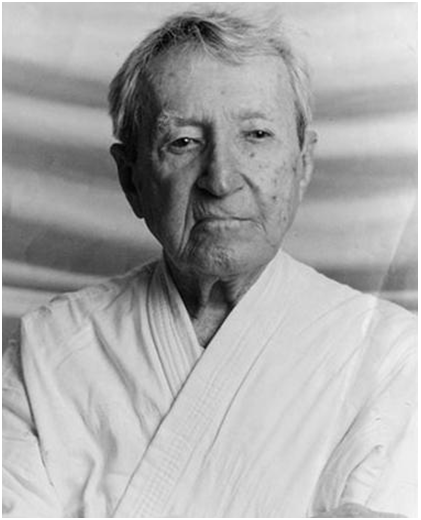
Carlos was a very small boy for his age, but extremely energetic and with a very strong personality. Many say that if he was born in current times he would certainly have been diagnosed as hyperactive. It was this hyperactivity that made his father take him to a gentleman by the stage name of Count Koma. Count Koma (real name Mitsuyo Esai Maeda) was a Jiu Jitsu/Judo representative sent to Brazil by Japan to spread Jiu Jitsu to the world, Gastao took his son to him in the hope that he could learn Jiu Jitsu and release a bit of the extra energy he was prone to have.
Maeda was quite fond of the 15-year-old Carlos Gracie and accepted the challenge of educating this skinny boy in the art of Jiu Jitsu. The teachings of Maeda lasted for the best part of 3 years with interruptions “here and there” when Maeda needed to travel for his duties. In 1921 the Gracie Family was bankrupt and needed to move from Belem do Para to Rio de Janeiro, and that was the last time Carlos Gracie saw his master.
He separated from his father and started working on his own in small meaningless jobs until a friend from the Belem do Para days met him in Rio. He had also trained with Maeda for a short while and knew Carlos was one of Maeda’s best students, so he invited him to train alongside him with the Special Police, a corps his friend belonged to. Inside Police walls is where Carlos started truly testing his Jiu Jitsu skills in No Holds Barred fights performed in closed quarters.
Soon he managed to save enough money to launch his dream: his own Jiu Jitsu academy. This very modest place was set in “Rua Marques de Abrantes” number 106 in the year of 1925. For this amazing challenge ahead, he asked brothers George and Helio to join him. In his first ad at a local newspaper, he wrote: “Se Você quer a sua face esmurrada e arrebentada, seu traseiro chutado e os seus bracos quebrados, entre em contacto com Carlos Gracie neste endereço…” – If you want your face punched and bruised, your butt kicked and your arms broken, talk to Carlos Gracie at the following address…”
In the time of the academy he taught diligently his brothers. He also promoted fights between his academy and other styles of fighting common in Rio de Janeiro such as Capoeira, Boxing and Wrestling in order to promote his academy. His team would consist of himself and his brothers.
Throughout the years Carlos started several other businesses for which he needed to often travel, so he relegated the training of his academies to Helio, his top student and brother. He also opened other academies in Fortaleza and Ceará, Brazil. Carlos Gracie always studied up close human and physical behavior, and throughout the years his studies paid off as he launched the famous Gracie Diet, which is used successfully to this day.
Although Carlos was away from his academy in Rio, he never completely stepped away from the sport and he cornered his brothers in almost every fight of their career. He was regarded as their master for as long as he lived. Carlos died at the age of 92 in the year of 1994, he had 21 children from different mothers, 11 of which he awarded the black belt in Jiu Jitsu. Amongst his sons are 3 BJJ legends in their own right, such as Carlson Gracie, Rolls Gracie and Carlos Gracie Jr (Carlinhos).
Carlos Gracie Junior, also known by his nickname Carlinhos (“little Carlos”), was born in Rio de Janeiro, Brazil, on January 17th, 1956, being one of the sons of Gracie jiu jitsu founder Carlos Gracie (senior), he was raised in his early days by his uncle Helio Gracie and trained at Helio’s academy from a very early age. Although Carlinhos Gracie trained at his uncle’s academy, he always followed his brother Rolls‘s views on jiu jitsu and cross training, often venturing with his brother, to sambo (sombo in the US) and wrestling competitions.
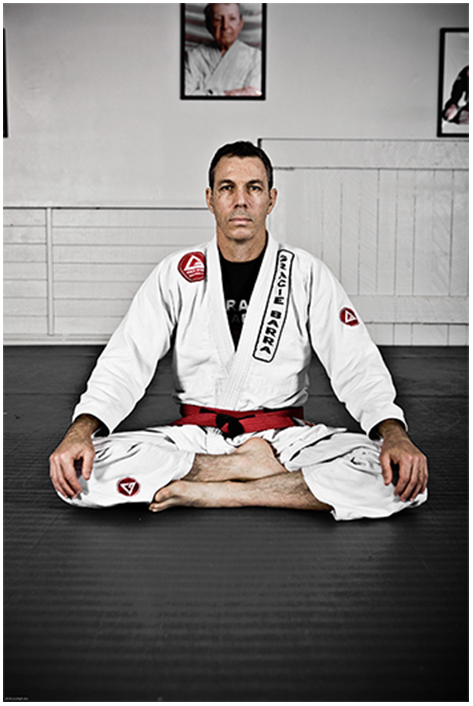
Rolls Gracie was the main instructor at the Gracie Academy, and when he left to work with his other brother Carlson Gracie, Carlinhos stayed behind to help run the main Gracie school together with his cousin Rickson Gracie. He spent two years there teaching, but his first steps as a coach came to a halt when he was accepted as a nutrition student at a Rio de Janeiro University. Around the time Carlos Junior enrolled in the University, Rolls Gracie started teaching on his own, separating his jiu jitsu class from his older brother’s class (although they still shared the same facilities). Rolls asked his brother Carlinhos Gracie to come and help him as an assistant coach, and as the University was close to the gym Carlinhos accepted.
When Rolls passed away due to a hang-gliding accident, his students and Rolls’ wife asked Carlos Gracie Junior to be the main coach at the Copacabana academy, an invitation which was accepted by the grieving Gracie. Carlinhos maintained his coaching position at the academy for a few years before he decided it was time to open his own gym in Barra da Tijuca.
Barra da Tijuca was then a very small suburb of Rio de Janeiro, with a tremendous beach, but with weak accessibility to the center of Rio. Every close friend of Carlos advised him that moving to the “Barra” was a bad idea, still Carlinhos went on with the project and so Gracie-Barra began. The name Gracie-Barra was used to differentiate Carlinhos’ academy from his uncle’s.
Even though many said Gracie-Barra was a bad idea, in little over one year the students grew from 20 to 200, most were either surfers or/and local hard men looking for a challenge. With time different jiu jitsu academies started opening all over Rio de Janeiro, many formed by Carlson Gracie’s black belts. Carlos saw a need for organized competition and a credible federation, being the visionary that he is, he created CBJJ – “Confederação Brasileira de Jiu-Jitsu“ which later grew into IBJJF (International Brazilian Jiu Jitsu Federation).
Though there has been some opposition especially in the early stages of the organization, against CBJJ’s for the lack of a democratic election, lack of prize money for the competitors, or even the overpricing of its competitions, the matter of fact is that many federations have come and gone, and the CBJJ is still standing as the most prestigious and best-organized federation in jiu jitsu and its titles are still regarded as the most prestigious by the jiu jitsu community. In the meantime, in between opening academies and federations, Carlos still managed to produce some of the very best BJJ fighters and coaches the world has to offer and have the most successful BJJ team in History, the one with the most international titles all around.
Carlos Gracie Junior will always be remembered as a true ambassador of the sport/martial art of Brazilian Jiu Jitsu and as a token of that status, he was awarded his Coral Belt in 2008, one of the greatest honors there is in the BJJ world.
FIRST COMANDMENT
To be so strong that nothing can disturb your peace of mind
SECOND COMMANDMENT
Speak to every one of happiness, health and prosperity
THIRD COMMANDMENT
Give all your friends the feeling that they are valuable
FOURTH COMMANDMENT
Always look at events from a positive point of view, and turn positive into a reality in life
FIFTH COMMANDMENT
Think always in the best, work solely for the best and expect always the best
SIXTH COMMANDMENT
Always be as enthusiastic about the success of others as you are about your own
SEVENTH COMMANDMENT
Forget about past mistakes and concentrate your energies on the victories ahead
EIGHTH COMMANDMENT
Always keep your fellow men joyful and have a pleasant attitude to all that address you
NINTH COMMANDMENT
Spend all the time you need in perfecting yourself, but leave no time to criticize the others
TENTH COMMANDMENT
Become too big to feel unrest, too noble to feel anger, too strong to feel fear and too happy to tumble in adversity
ELEVENTH COMMANDMENT
Always have a positive opinion about yourself and tell it to the world, not through words of vanity but through benevolence
TWELFTH COMMANDMENT
Have the strong belief that the world is beside you if you keep true to what is best within you